
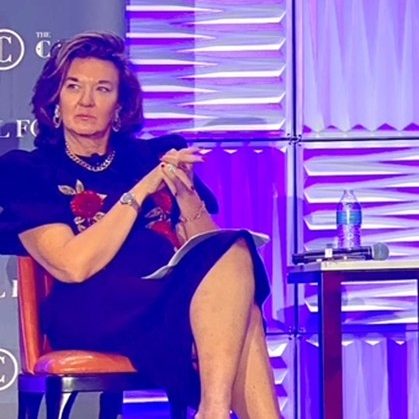

Looking swiftly past the embarrassing LinkedIn postings of dozens of antitrust lawyers and economists, advertising their networking activities in the plight for clients’ instructions, the 2025 ABA Spring Meetings just over in DC felt a lot like “fiddling while Rome burns”. The usual string of law firm/consultancy parties, breakfasts-lunches-dinners which punctuate the event (and are a major reason why over 3,500 antitrust lawyers converge on DC this time each year) felt especially out of touch while real stuff was happening in town all around us with profound implications for the world (the only concession to reality being the 3-minutes ovation to Rebecca Slaughter defending the FTC, while the antitrust bar is bending the knee).
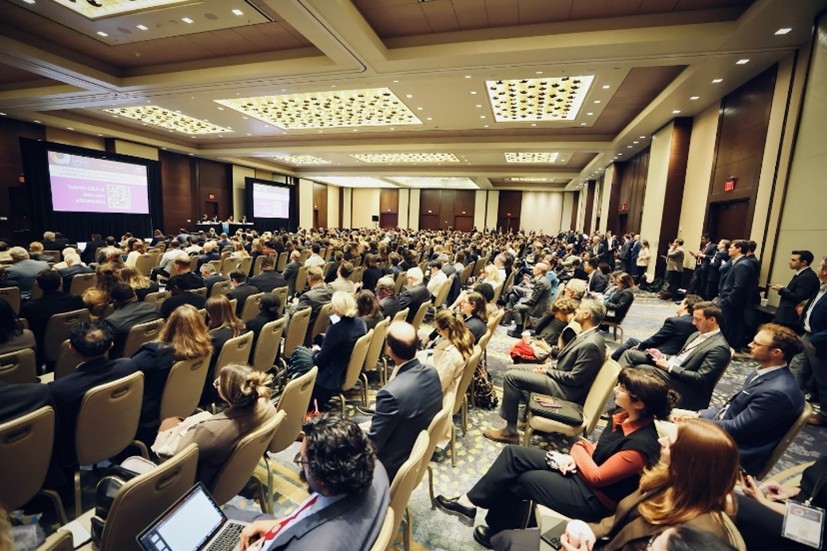
Rebecca Slaughter’s packed ABA panel
The antitrust world has always been its own bubble, but more than ever it is now detached from the reality we are currently wading through. And this is true both of practitioners and of most regulators. Extraordinary. Or perhaps not, given so many managed to ride through the whole of the Biden Administration era while remaining also quite untouched by the deep rethink of the goals and purpose of antitrust that was championed by “Wu, Kanter and Khan”.
But what is happening now is truly extraordinary. The heads of the Antitrust Division and the Federal Trade Commission, key event attraction year after year, pulled themselves and all of their staff out of the event on a claim that the ABA was pursuing a “leftist advocacy” agenda incompatible with the values and the goals of the Trump-Vance administration – while simultaneously being too “defence friendly”[1]. Characterising the ABA as a pursuing lefty values seems like a stretch – much less that it is defence-friendly institution. It was certainly never a beacon of progressive antitrust thinking (even this year, the “Chairman’s Showcase” programme, which so much riled Tim Wu for being out of touch,[2] was outrageously biased in composition but in reality vintage ABA fare).
So far so boring. No one goes to ABA for the scintillating forward-looking content – again, it’s all networking around predictable panels of mostly defence-side lawyers with a sprinkling of Europeans/others and a few global regulators. But much more significantly, while skipping the ABA entirely, agency heads Slater and Ferguson were setting out their agenda simultaneously speaking at other venues around town, pushing a strong “America First” / “MAGA Antitrust” approach – yes by all means let’s fight the bad monopolists which threaten our freedom of speech (“the censorship cartel” was discussed at a closed door FTC/FCC/DOJ event[3]), but let’s focus explicitly on the issues that matter most to the American people – jobs, food, housing, healthcare. At least that’s the idea.

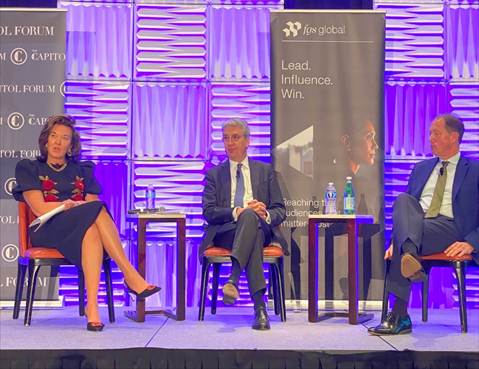
While some of the framing was deliberately focused on boosting “little tech” and emphasising “the realignment” (“MAGA Republicans agree with the progressives, Big Tech is bad” – Y Combinator event with former Biden regulators), the broader message was in practice that the federal agencies are fully embracing the populist MAGA agenda (Capitol Forum event moderated by Oren Cass), with few concessions to the usual “patois” of antitrust panels especially in Europe – innovation-blah, level-playing-blah, consumer welfare-blah. Tariffs came up (it was after all “Liberation day”) and again were explicitly discussed and embraced as part of the all-round economic policy effort to upend the global trade system and reindustrialise America.
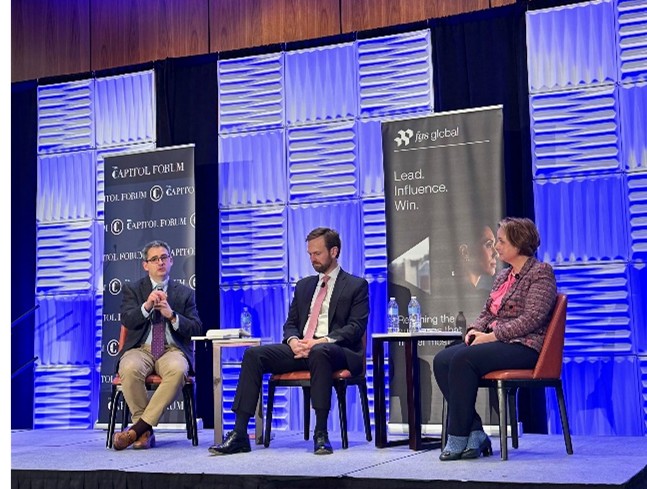
Slater, Ferguson and Cass at Capitol Forum event
Tariffs, indeed. While the world is discombobulating and global reactions range from horror at the claimed stupidity/audacity of the approach, to predictions of inevitable doomsday, to efforts to rationalise it as part of a deliberate bold gamble to overhaul a trade regime seen as having done enormous damage and responsible in the first place for America’s deindustrialisation, surely even the sedate antitrust world should get nothing will quite be the same again. Antitrust (antimonopoly) and trade and finance are intertwined, and the links are deepening. The US heads of agency were very explicit that the Administration broader economic policy goals on trade overhaul were very much their agenda too.
Yet their European counterparts were as ever, mostly “business as usual”. Change is in the air, it is all around us, some concession to “it’s a complex world” but we’ve got it mostly right and we should be careful not overdo it, lest god forbid we “politicize” antitrust, lest we “overburden competition authorities” with “other” goals. We’ll do a revision of the EC Merger Guidelines sometime in 2026 (oh, and we will introduce the novel concept of “dynamic competition” in mergers!) and who knows, maybe we’ll have a New Competition Tool sometime in the next 5 years.
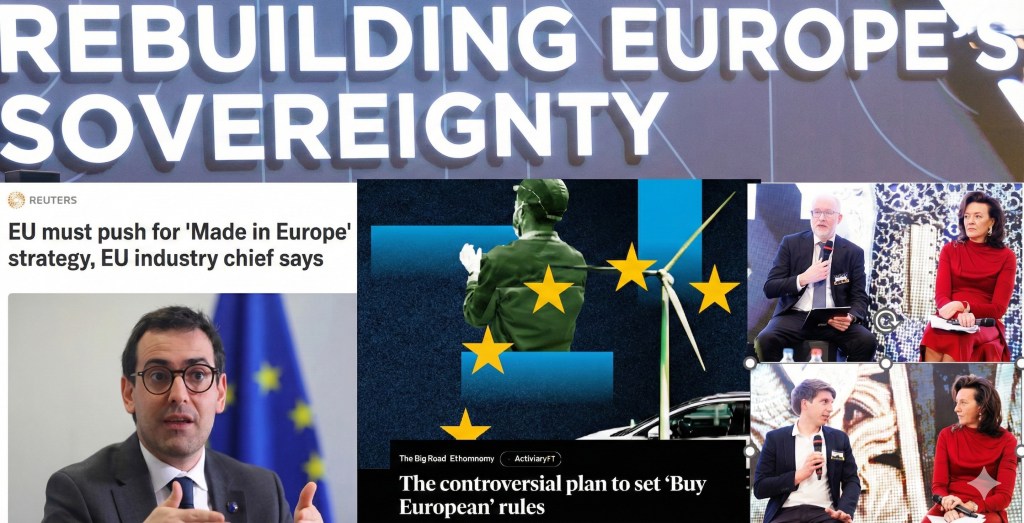
This is especially extraordinary, as European antitrust is facing massive vectors of change. If it did succeed to duck entirely the debate around the end of neoliberalism which was at the core of the Biden administration, it now faces (1) the “Draghi mission” (grow or die) and (2) Trump’s “America First” revolution. There should be a lively, scintillating discussion in Europe about the contribution antitrust can make to the response – shaping “buy European” policies to accelerate strategic autonomy in key sectors, assisting industrial policy and supply chain resilience, rethinking merger assessment and case selection. Do we have anything to say on tariffs? Let’s not pretend otherwise: antitrust fines are bound with that discussion.
Yet the European discussion (as exported to DC) is not about these issues at all. There is a persistent belief that antitrust is a specialist field founded on robust economic principles codified in established law. We have it, we know what we are doing, changes at the margins only please. Which leads to extraordinary statements in the ABA’s flagship “Enforcers’ Panel” (minus the Americans this time) suggesting a foundational priority for Europe is now to pursue “killer acquisitions”. Are we serious? Okay so we may catch oooh one a year? What is the empirical recurrence of these events? Fine let’s do it but this is 5 years too late as a topical issue.
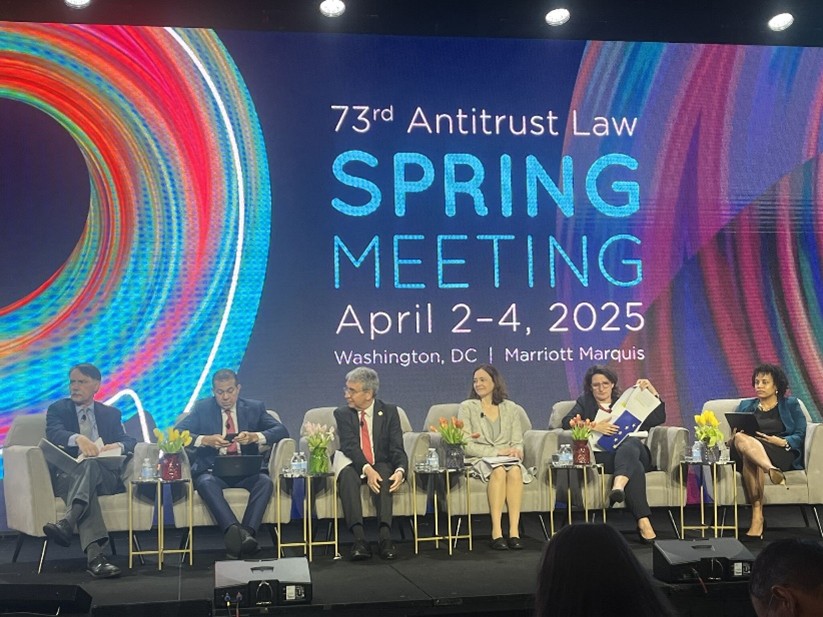
ABA Enforcers’ Roundtable 2025 vintage
We keep hearing “we cannot politicize antitrust” – as opposed to what? As opposed to the current “pure science codified in eternal law”? What have been our successes with the “pure science”? Have we succeeded in preventing entrenchment of digital monopolies? Yes we were pioneers at the effort. But what have we achieved? Are we “taming Big Tech” with regulation? The worst-kept secret in Brussels is the DMA is going nowhere and fines are bound in the tariff nightmare, with only academics and civil society with their usual circus of conferences and workshops pretending otherwise. Ask European digital businesses. Have we prevented really anticompetitive concentrative mergers? Maybe a few. Many more have gone through with perfunctory remedies.
Critically, how long do we want to keep pursuing the religion that “national/European champions are bad”? This has been one of the most enduring articles of faith in Europe, traditionally juxtaposed to the “competition competition competition” orthodoxy. We have clung to that mantra forever. All the while, the world changed around us and Draghi came along with the obvious observation that European business is too small and fragmented and simply lacks scale to compete globally.
Of course the answer is not wanton demolition of merger control. But going forward: should we care for a merger to monopoly of European satellite technologies when the alternative is a market dominated by StarLink? And if the geopolitical imperative is strategic autonomy in key sectors for Europe (defence, clean tech, digital), with Germany finally overcoming its “debt brake” taboo, how do we purpose competition enforcement to support that goal? Do we insist on “no discrimination”, our very own specialist subject? Come sell into Europe everyone! We are WTO faithful and we will welcome everyone! Anything else would be protectionism, right? So while the US goes all in with “America First”, and we are a digital colony, should we not be working as a matter of urgency on intelligent “buy European” rules (for instance) as a major focus of competition policy thinking right now?
That these issues are not even in the antechamber of the discussion in European competition policy circles, which persist with their usual carousels of pay-to-speak/OECD/ICN events and kiss-the-ring of unremovable regulators, says a lot about our predicament. “We care about innovation”. “Competition drives innovation”. True, in less exceptional times. But our problem today in Europe is growth. And strategic autonomy. Lack of action about the real, fundamental issues facing Europe is the reason why – as Julius Krein famously said at my “Perfect Storm” conference at the end of January – the current US administration “doesn’t care about Brussels at all”. And that could not be clearer from the vibe last week in DC.
But “decoupling” from the US is now an imperative, because we have been clearly told we are on our own and can no longer count on US protection. Shouldn’t that discussion be the only one that matters not only for defence, but across all strategic sectors and all policy tools? There is a close link between trade and finance and antitrust – where is the leadership we need to see this, strategise accordingly and pursue it deliberately? We may not agree with what the US does but at least it is a policy. That’s our persistent problem. In the absence of intellectual and policy leadership on these issues, of any creative policy R&D, we stick to more of the same and continue to send neutral-to-bland “continuity” signals. There is a lot of work to do, and we should know in which direction. Read the room, folks.
[1] FTC Chairman Ferguson Announces New Policy Regarding American Bar Association | Federal Trade Commission, and Letter from Chairman Ferguson to Staff, 14 February 2025



 The “Post-Bubble” Blog