
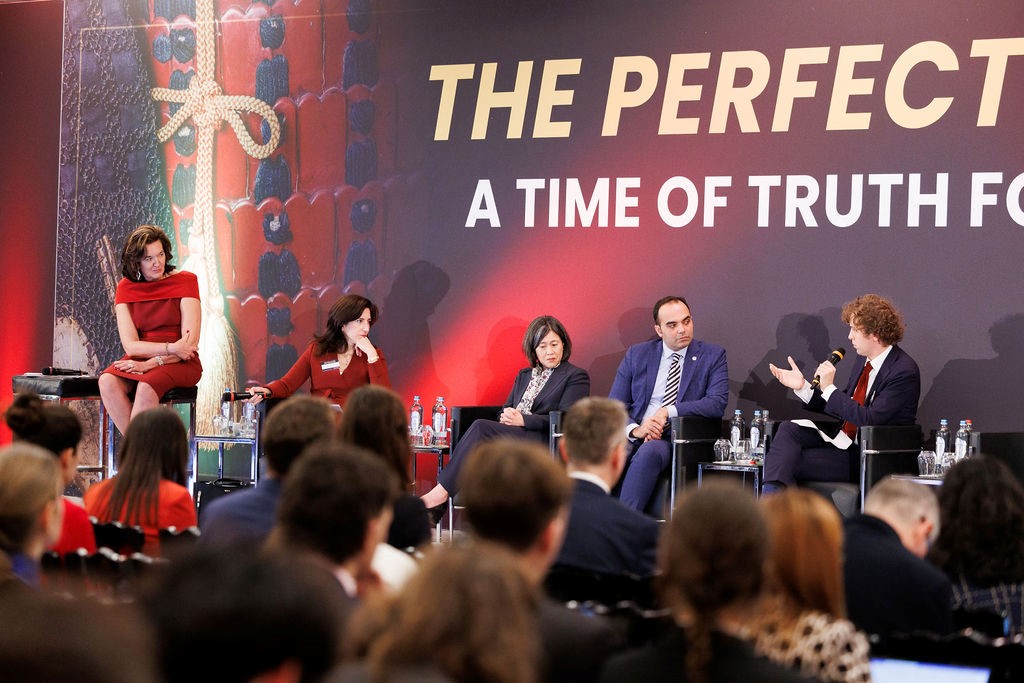
“The Perfect Storm: A Time of Truth for Europe?” – 30 January 2025, Brussels
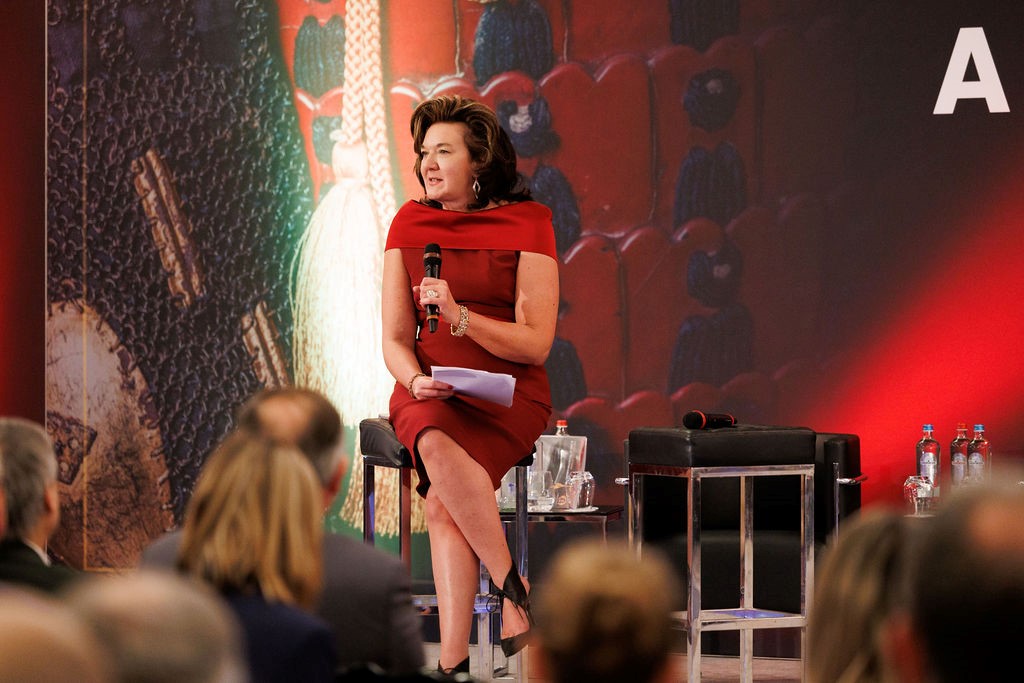
Cristina’s Conference ReadOut
Big picture:
- Our institutions are struggling to even narrate the scale of the threats outlined in Letta/Draghi to Europe’s social and economic contract – let alone respond to it. The “Competitiveness Compass” does not reassure on economic plans, thin on detail and implementation. There is a sense of leadership vacancy and impotence in every dimension. Maybe things are happening behind closed doors, but what is the message to citizens? Mostly silence, with a condiment of peculiar social media postings (bonding with cows etc.).
- Competition policy still struggles to articulate its mission in this predicament – stuck between a past it knows is no longer possible, and not yet able to define its role in a Continent that should be on a quasi war-footing in terms of economic emergencies.
- We are on our own, as “the new US administration does not care about the European Commission” (notable quote of the year). Will do deals with individual capitals, divide and conquer, flex power and throw its weight around. There are multiple factions in the Republican party (traditional GOP, MAGA, Big Tech, Silicon Valley Right…) and it is hard to anticipate how it will shake out. And while we saw the urbane and polite face of the party in this discussion, the reality including on antitrust may well be much harsher than we hope.
- The threat to democracy from the Tech Right and its merger of platform and political power is real and imminent, yet we are still discussing which tools might be available. It’s more urgent than ever in Europe that we recognise regulation is not the answer, and build at least some of our own – the infrastructure we rely on may turn rapidly hostile.
- The crop of former Biden regulators were extraordinary individuals of principles and integrity. We will miss them.
More detail:
The flagship moment of last year’s event (Antitrust, Regulation and the Next World Order, 31 January 2024) was the response of DG Comp’s Director General to a question I put to him on how the agency was thinking about the relationship between competition and industrial policy (a major theme of the day, given the Biden Administration’s “all of government” approach, and big initiatives like Chips Act and IRA). “You know – came the response – next to the big issues of our times – industrial policy, trade policy – competition policy is just a… side dish”. As he said it, the 1,000 strong audience stopped scrolling their smartphones, looked up startled and started posting on social media: “DG Competition itself says it is a bit player”. The response – condescending, somewhat irritated – ricocheted for days in the press (The great US-Europe antitrust divide) and refused to die as many including the European Digital SMEs organization flagged their frustration. As the rest of the year came to be predictably dominated by bleak diagnoses on the state of the Union (Letta and Draghi) it felt emblematic of an agency stuck in its own (ivory) tower, unengaged with surrounding realities and condescending to the rest of us. “We know what we are doing, competition is all we need, alternative is bad national champions, just go away and don’t question us”.
At the end of a year that saw elections, war and economic threats not on a distant horizon, but on our doorstep, the new Commission finally settled in by early December. On the cusp of major changes, only 10 days after Trump’s inauguration, I decided nonetheless to go ahead with the event – The Perfect Storm felt the right metaphor for a time of huge uncertainty with Europe battered by huge headwinds both externally and internally, and the bluster and noise of Trump’s narrative just beginning to unfold. Precisely because of the huge uncertainty, it felt like the right time to hold a big conversation focused mainly on Europe, on how our institutions are shaping up right now to deal with circumstances that feel scary and perilous.
I am not encouraged.
The flagship moment of this year for me was Julius Krein, founder and Editor of American Affairs (a quarterly journal debating “domestic and foreign policy, economic theory, political thought, and social criticism”) in a mixed panel with Republican and Democratic speakers deadpan delivering the killer line: “The Trump Administration does not care for the European Commission. Bunch of people sitting around talking about democracy. The approach will be transactional, which means will do deals with Member State leaders who get it, like Orban. And with Paris and Berlin…. That’s it”. I made him say it twice to make sure everyone understood. It was magnificent, delivered with nonchalance just after the softer tones of two Republicans – Texas Attorney General Ken Paxton (reassuring on the continuation of the fight against Big Tech) and former Trump 1.0 DOJ official Roger Alford (hopeful about antitrust realignment, and that enforcement gains at the federal agencies will not be entirely rolled back with the new heads). Everyone was stunned, and Krein smiled serenely and untroubled through the passionate comeback of Barry Lynn on the democratic imperative (must watch panel, How Will Trump 2.0 Wield Antitrust Policy, and Deliver on Economic Populism?). So there we have it. We know it. But there we have it. Will be a rough ride. Are the Europeans ready to meet the moment?
A ”Competitiveness Compass”, and a schloss retreat?
Coincidentally the day before the event the Commission published its Competitiveness Compass (Competitiveness – European Commission, 10017eb1-4722-4333-add2-e0ed18105a34_en) – the “response to Draghi” meant to set out the policy roadmap for the next 5 years. A classic EC document (we have seen many before, starting from Lisbon 2000) with much aspirational talk in every direction and lots of timelines, but little detail. With giant servings of motherhood and apple pie, like Europe must be the place where tomorrow’s technologies, services, and clean products are invented, manufactured and marketed, as we stay the course to climate neutrality. A Europe that remains home to cutting-edge scientific and research innovation. That retains and attracts the world’s best talents and provides quality jobs for all. Where upwards convergence between regions strengthens our global position and our unity. That shines as a leading global investment destination and rewards risk and entrepreneurship. Amen.
The Commissioners themselves were locked in a Belgian schloss on the day of the conference, for a team retreat (ostensibly the reason why no one was “available”). Not much detail on discussions taking place there were filtering through, other than social postings of dumbfounding hilarity (yoga at the gym, bonding with cows in a field). Someone could have come out and engaged with a large live audience of anxious, committed Europeans and top US regulators, in a public good, free event to discuss substance – but no. Make of it what you will. Pay-to-speak marketing events with lawyers and consultants, sure.
A bleak diagnosis, and even bleak prognosis on our economic outlook
Another “must view” of the day was the panel on “Managed Decline”, or Worse? Can Industrial Policy Save Europe? An exceptional group of economists dissected Europe’s current predicament – low productivity growth, two decades of export-led economic policies now threatened as exports are shrinking (particularly cars, pushed back by aggressive capacity building and quality improvement driving the Second China Shock, and declining US imports likely exacerbated by new tariffs), and domestic demand depressed by low wage growth; failure to complete the internal market imposing costs on business equivalent to 44% cross border tariffs; lack of capital market union and of adequate funding mechanism for startups and small businesses (great analysis by James John IMF). While there was broad consensus on the diagnosis, there was a lively discussion on the cure – with Sander Tordoir (CER) and Johannes Lindner (Delors Institute) pushing for a combination of “Draghi solutions” (selected subsidies to strategic sectors funded by tariffs, “buy European” procurement rules etc.), while Luis Garicano (LSE) in inflammatory mood was shooting down the idea that the Commission could ever be trusted to do any of it effectively – advocating instead for deregulation at all costs.
Centre-stage was the difficulty of designing and funding a European industrial policy initiative: where is it going to come from? How will it be paid for, when lack of trust and free riding concerns prevail among Member States? The German elections will be key to the answer, and that is saying something given the enormous turmoil about Germany’s “Detroit moment” (loss of industrial capacity) and political upheaval. Meanwhile France is also mired in chaos and uncertainty. The future is wildly unpredictable. Not much optimism from anyone – including former Secretary of State Sven Giegold in the opening session with me (Chair’s Introduction and Welcome, “A Provocation” – conversation with Sven Giegold). The problems are huge – and between “managed decline” and “worse”, Rana Foroohar (FT) picked “worse” (she also posted a nice piece on the event’s discussions in the FT over the weekend (Europe’s perfect storm).
Enters competition policy?
The “side dish” moment at the 2024 event started a year-long debate on the role of competition policy in this new economic reality. In fact, largely a year of misdirection and frustration. Misdirection because vested interests and intellectual laziness consistently led to the issue being framed in the wrong terms. And frustration because that prevented any serious progress.
I argued we need an honest effort by antitrust agencies to engage with the economic predicament we find ourselves in. That is, to ask themselves the question: “if the mission for economic policy is to favour equitable growth, and competition policy is a tool of economic policy, how do we most effectively contribute to the growth mission as set out in Draghi/Letta?” This would have required (a) acknowledging that competition policy is an economic policy instruments directly intended to address the power of corporations; (b) doing policy workshops and brainstorming with other policy tools on how to integrate competition principles into the growth mission; (c) conversely, integrating insights from macro/ trade/finance into the analysis of markets – moving on from the narrow formulaic consultant toolkit. Instead, what we had through last year has been a tedious diet of wilfully wrong framings and misdirections: “but competition policy cannot be used to address “all other” objectives” (who said?) “but competition policy should not be politicized” (who said?), and lots of homilies along the usual lines that “our job is to ensure genuine choice, effective competition, a level playing field”. Fine. Sure. BUT this is not remotely acknowledging the moment. Which is Europe is in major economic danger. We need to restart the engine. As Draghi says, in an economy that is permanently underheated the engine does not turn. Competition will not generate growth. Just as regulation will not generate growth. Then what’s the use of bleating about “competition”? We should be almost on a war footing.
Yet most of Europe’s competition agencies have been so stubborn and uncooperative with the mission (alternatively, defensive and unwilling to read the writing on the wall), aided and abetted by The Bubble which just wants no change and academics who refuse to think beyond their received wisdom, that governments are now looking for scapegoats. The case of the UK CMA, ritually sacrificing the Chair and handing the keys to a former Amazon executive, is emblematic. Though many have expressed shock horror and the sentiment the sky is falling, frankly I saw it coming a mile away. This was predictable.
We discussed all this on the panel with five heads of national European agencies, plus Andreas Schwab MEP (Absent Without Leave? How Does Competition Policy Fit the “Competitiveness” Mission?) There was genuine sign of an earnest struggle by panellists to engage with the mission (no “side dish” sentiment) and multiple useful suggestions for what this may mean in practice. I commend this panel though I think there is still considerable way to go to move forward constructively towards an “all of government approach”. There is still too much “what can we do, we are just policing competition, we cannot engineer growth” – but that’s not the ask. The ask is much more proactive engagement and coordination across tools. To favour growth. As a policy matter. Certainly not reducing enforcement (especially merger enforcement) which is already so weak it’s practically horizontal. We are not there with the policy design yet.
Trump 2.0
Katherine Tai and Rohit Chopra (still CFPB director at the time, formally fired by President Trump – to great press coverage – on his way back the next day) gave an intellectually powerful and passionate account of what they had tried to achieve during their mandate in their respective areas: trade and financial consumer protection. Their moral strength and integrity, their ability to articulate a coherent vision for how their mission was part of an overall fight against corporate power which extracts and exploits and threatens democracy, were mesmerizing – just watch The Battleground for Global Economic Domination (same comment for Heather Boushey – formerly White House Council of Economic Advisors, outstanding on industrial policy). The panel produced another highlight of the day: “Where are your scars, Adam?” – Katherine Tai’s reposte to economic historian Adam Tooze who had suggested the “vision” of the Biden administrators had ultimately failed as they were “crushed at the polls”. Must-watch moment (quoting Martin Sheen in The West Wing): “If one has no scars, then there was nothing for them worth fighting for. My arms are covered in scars, Rohit’s are covered in scars – where are your scars? We did have something worth fighting for” – highly emotional moment.
This aside, what were the take aways from the panels on Trump 2.0? On trade, we are seeing right now President Trump going ahead with tariffs notwithstanding the consensus view they will be chaotic and harmful. The US seems in full retreat form the world and determined to wreak havoc. On consumer financial protection, it’s not clear whether the CFPB will survive the sweeping culls – but Director Chopra was making a clear case that his efforts against discrimination and debanking were in fact common to the Trump administration’s. On antitrust, AG Paxton and Roger Alford made reassuring noises on realignment and continuity: the fight against Big Tech will continue, through antitrust and non discrimination laws, and the rollback relative to the “Khan/Kanter era” will not be complete. FTC Commissioner Slaughter (one of the two remaining Democratic commissioners) was more cautious. The fact that the DOJ sued to block HP/Juniper the same day (a decision which could not have been taken without approval of AAG nominee Gail Slater) seemed significant and maybe supportive of the view that merger control will not return to a “free for all”. We will see.
But in terms of implications of Trump 2.0 for Europe, as mentioned Julius Krein was splendidly clear – and menacing. We are on our own. Worse, on regulation enforcement we have been told not mess around with US companies – and everyone is looking at their shoes while pretending “nothing has changed”. Where’s the European response?
Platform power and political power, algorithmic amplification and what to do about it
“What is Europe doing to defend its democracy?” was a key theme of the next panel. American “freedom of speech” and “First Amendment” rights (as discussed by Jacob Mchangana) are not in question, but the weaponisation of platform power to discriminate in favour of certain voices and again others is a major problem – when “voices” advocate for one party to the disadvantage of others in an election for instance. Much discussion of the problem (Guy Rolnik, Marietje Schaake) and what to do about it with the tools we now have (Alexandra Geese and Renate Nikolay on Europe, Chi Unwurah on the UK, also Dovev Lavie with an academic suggestion). Hard to put to rest the sense that Tech Oligarchs are running amok with Trump’s protection, and European regulators are floundering in response, mostly admiring the problem but unwilling to “stoke the beast”. A terrifying panel – Algorithmic Amplification, Platform Power, Freedom of Speech and Tech Oligarchs.
Build, don’t just regulate!
Frank McCourt of Project Liberty made a strong case that the answer lies in building the tech to support a different internet. This call resonates strongly right now in Europe where the backlash against our regulatory drive is now in full swing, the frustration of businesses with the failed promises that regulation would deliver a “level playing field” are coming to the boil, and the realization that we do not own any of our own digital infrastructure (and the “kill switch”) is finally dawning on many. The last panel was an impassioned plea for Europe to rise, do its own thing, and for regulators and politicians to support this critical digital portion of the necessary industrial policy effort. CEOs and founders were vocally making the case it’s NOW or never, funders were saying the money is there, let’s build demos not memos. #EuroStack! A positive hopeful note to end a long bleak day.
…but in fact, we had a Grand Finale!
As a ray of hope in an otherwise grim landscape, Lina Khan appeared in the last half hour for a brief “exit interview”. Lina is a legend in Europe and the purity of her intent, her formidable intellectual power, her vision and the inclusiveness of her mission are an enduring inspiration for many over here. That young woman has scars, more than most, and yet so much grace covering a core of steel. Standing ovation at the end with a pretty full room at 6.30 pm… Was getting choked. Though I am not American… “thank you for your service” seemed the only possible thing to end with. Amen. Grand Finale “A conversation with Lina Khan”
More when I had time to process the main take aways…


 The “Post-Bubble” Blog