

The world has been upended by President Trump’s re-election. Everything has fundamentally changed. Europeans already sobered by the Draghi Report, a catalogue of all our failures, have been stunned by an election result they dreaded but had not remotely prepared for, and the mood is palpable fear. Combined with chaos at home (war still raging on the Eastern front, political upheaval in France, “carmageddon” in Germany, annulled elections and rise of far-right parties in Parliament), no one knows how this will pan out. What we know is that there is complete paralysis in Brussels as we start to take a measure of what may be coming our way – with decisions (DMA non compliance, Google ad-tech) and policy initiatives all stalled in the wings, all in suspended animation until the new Administration shows its true colours and we figure out what threats and retribution might be coming out way.
In the turmoil of the last few years, the “antitrust bubble” has remained a relative oasis of calm and total denial. The system relies on a network of “safe spaces” where time is suspended and values and principles adopted a quarter of a century ago are adhered to without question; where all sides (lawyers, economists, agencies) collude to reassure each other they are on the rightful path; and where resistance to change is absolute. For “safe space dwellers” (otherwise known as “the antitrust bubble”) Trump’s re-election might have encouraged the sentiment that “finally everything will go back to normal, enough of these progressives/populists, we will go back to our robust foundations, not slogans, and nature will heal”. Except we are not going to go back to 2007. Not at all.
Europe as a laggard: we embraced neoliberalism but failed to spot its demise
Europe remained entirely immune from the deep questioning of the neoliberal system of beliefs (and the “Washington consensus”) that has been such a pervasive feature of the policy discourse in the US over the last 5 years. The challenge to efficiency, to consumer welfare, to free trade and trickle-down economics, passed the European elites (and bureaucracy) entirely by.
While no comprehensive alternative “post-neoliberal” paradigm emerged in the US, at least the discussion was being had, and at least in one place – antitrust – an alternative vision emerged. In a deeply transformed political economy (post financial crisis, post Covid, with chokepoints exposed) Lina Khan and Jonathan Kanter challenged the neoliberal/Chicago and post-Chicago prevailing consensus, reversed 20 years of agencies’ permafrost, especially vis-à-vis tech giants (supported by a groundswell of activity by State AGs), broadened the lens from “pricing” to “power”, and from consumers to workers, small companies, citizens and their “pain points”. This fitted with an “all of government” approach in which antimonopoly was a common thread across multiple related areas of policy – from trade to industrial strategy to consumer finance. A strong group of connected officials pushed along with them in a consistent direction.
While this was happening, European competition enforcement remained moored to its neoliberal conversion at the turn of the century. An ocean in between, and the persistence of bureaucracy and leadership (Commissioner Vestager was first appointed in 2014, way before this deep questioning got underway in the US and before the tide turned finally there in 2019) has meant no real incentive for genuine rethink.
In part, Europe continued to bask in its own sense of primacy for having first started antitrust action against digital giants (Google from 2010, then Meta, Apple and Amazon) and passed pioneering legislation on data protection, economic regulation and content moderation since at least 2018 – all at a time when US enforcement was in “deep sleep”. But then as one after the other enforcement cases failed to deliver and regulation proved to be extremely difficult to get anything concrete out of, European regulators in the last few years have not really heard the “drums beating from the hills”, resisted engagement in a constructive rethinking exercise (with few exceptions, like then Chief Economist Tommaso Valletti) and remained steadfast to a vision of antitrust which got established with the “more economic approach”-push of the late 1990s/early 2000s.
I was there at that time: newly minted economic consultants, all forged in neoclassical IO economics, enthusiastically sold to agencies and lawyers (and ultimately, clients) that we needed to “purify” competition enforcement from any “extraneous” consideration – any form of “public interest” for instance – because fundamentally “as economists we have new tools, we have structure and methods” and “we don’t know how to trade off other goals with efficiency and consumer welfare”. Amen, so let’s just stick to pure antitrust science! Agencies followed in hope, and lawyers saw us as useful support to their advocacy (they certainly don’t think we possess great wisdom, we are just convenient peddlers of snake oil, to be weaponised as “their” snake oil: “do me a GUPPI! do me a vertical arithmetic!”). That was unquestionably an extremely effective lobbying exercise, aided and abetted by IO academics who were also keen to establish a “guru” role for the profession in Europe. It culminated with Damien Neven announcing in December 2008 at “my conference” the launch of the Guidance Paper on Exclusionary Abuse – what we felt at the time was a milestone for enforcement against conduct abuse. That was it: the “more economic approach” was “in”, eventually adopted as major progress that was going to improve the quality of decision making – fewer “type 1” errors, less danger of overenforcement with all its pernicious incentive effects.
Denial and straw men
The changes in the real world and the political economy that prompted a rethink in the US (increases in concentration, inequality, huge imbalances of power) were not specific only to the US. An entire system of beliefs premised on the pursuit of efficiency and the welfare of “consumers” is ultimately designed to generate multiple “exculpatory narratives” for almost any form of conduct and almost any concentration of assets. My skill as an economic consultant (or economic advocate) was the extent to which I could come up with a plausible-sounding narrative to defend a particular conduct which appeared prima facie problematic: finding ways to argue that a merger bringing together direct rivals will be procompetitive and efficiency-enhancing, ditto a vertical or conglomerate deal; finding ways to argue that exclusivity contracts are not foreclosing but in fact benefit competition; that discounts are only harmful if they foreclose “as efficient” competitors, that territorial segmentation is mostly efficient price discrimination; that price discrimination that charges more to less elastic consumers is (guess what) efficient; that vertical integration is again efficient and procompetitive, that tying/bundling are again entirely benign. For the record, they can be, sometime. But these “standard issue” defences are not politically neutral – they reflect a political system of values, embedded in the “standard issue” analyses consultants (and academics) routinely do – one in which all that matters is efficiency and we don’t think for instance distribution is at all our issue.
What many of us have been saying is that the system of values underpinning “traditional” antitrust analysis has come under strain because outcomes are so out of line with basic notions of societal benefits. An economic model we can all sketch that tells us a certain practice will not reduce competition often jars with what we know of commercial conduct. In a world profoundly transformed by multiple pathologies and uncertainties (from concentration to inequality to unfairness to deindustrialization to climate crisis) it should be imperative to look up from the narrow technocratic purview of antitrust practice, founded on 1980s principles, and ask: is this still all that matters? Efficiency? What else should I worry about?
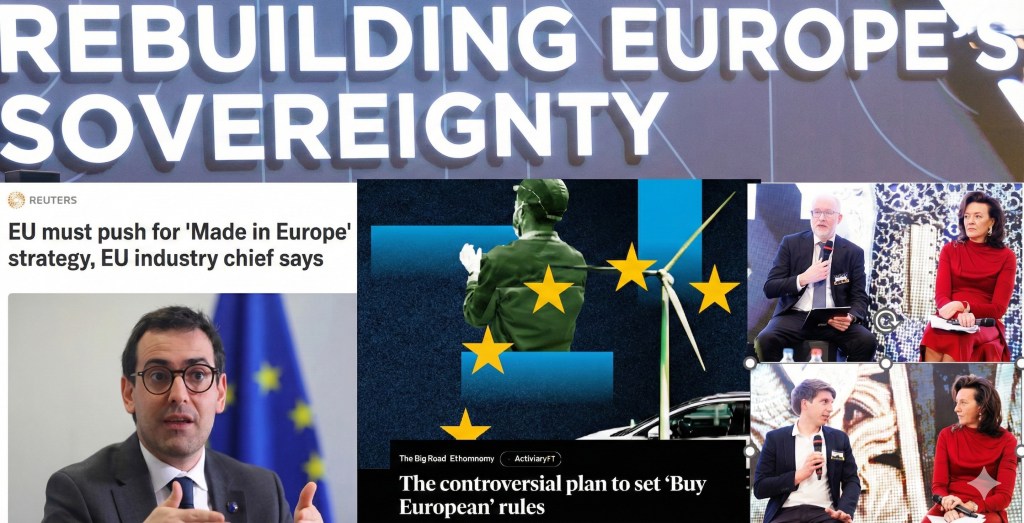
The urgency of this quest got even greater in Europe with the Draghi report, which exposed in all their gravity the current issues Europe is having to confront, and candidly asked that competition enforcement “gets with the mission”. That it joins up with trade and industrial policy to help pursue growth and investment.
Yet the reaction of the “antitrust complex” has not been open to any of this quest. One line of resistance has been that progressive enforcers in the US just “hate economics” and are refuting scientific evidence in favour of slogans and dogma. In reality what Lina Khan (and Jonathan Kanter) have done is not to “question economics” as such or the value of “empirical evidence” overall. They both hired outstanding Chief Economists. What they have questioned is the torrent of submissions put forth at vast expense by defendants, necessitating agencies to respond in kind using taxpayer money, and most of which is inane, inconsistent with the documents, contrary to basic common sense and deliberately obfuscating. Another major line of resistance has been that anyone asking for a reflection on the goals was acting “politically”, in oblivion to true science and legal gospel. Yet another related one has been that the “goals” of antitrust are clear from the beginning of time, or at least since the beginning of the century, are codified in the equivalent of Moses’ Tablets and anyone advocating for a broader set of connections (e.g. between competition, trade and industrial policy) is just wrong. We should not try to “pursue other goals through competition”. One instrument, one tool, otherwise the sky will fall in.
This decoy – the charge that anyone saying anything different is “political” and there can be no “conflation” of goals in a technocratic pure mission – is in fact entirely a straw man. One that has been forestalling any serious re-evaluation in Europe. A whole network of “safe spaces” is the means through which the status quo is jealously preserved and all meaningful debate (other than on minutiae of law or guidelines or cases) is sterilized away.
Europe’s “Competition Safe Spaces”
The European antitrust discourse (such as it is) is conducted through a network of “safe spaces” where the “community” – lawyers, consulting economists, academics, agency officials – keep meeting and validating each other. This “bubble” is narrow, closed and self referential because incentives have been deliberately set up in this way, to stifle all dissent and preserve the cash cow.
The ”Bubble” moves as a “compact” from one conference to the next – there are dozens a year, from “professional” conference organizations to academic events to law firm or consultancy gathering. What they have in common is a strong “pay to speak” model in which speakers either pay for a speaking slot on a panel (or sponsor an entire panel), or the event is run for explicit purposes of marketing to clients. Regulators are just “bait” in these events (they don’t pay, but attract punters). The composition of panels is predictable (in vast majority, defence lawyers and economists), topics are narrow (“Has the approach to conglomerate mergers changed with this latest XXX case?”), and quality of the debate is low. No dissenting voices, no civil society asking “wait, is this what you worry about?”.
“Academic” economic events are also most often sponsored (by lawyers and consultants, to make ends meet) and tend to be a unique narrow church in which a narrow range of IO research is presented. Policy interest tends to be minimal, engagement with “the real world” minimal. Gatherings like the annual conference of the Association of Competition Economists across European cities are again safe spaces for consulting economists to celebrate their narrow set of tools and the cases they worked on, with agencies and a few academics who in the main do not question the consensus.
“Policy” conferences sponsored by the Commission itself or proxy think-tanks also tend to be narrow, self-referential and stick to the prevailing orthodoxy. There is a whole parterre of academics (lawyers and economists) who are part of some opaque appointed “advisory group” and are in a position of mutual validation with the Commission – in turn affirming that what is being done is “just right” and reassuring everyone they are collectively on the right track. This same group unquestioningly supports digital regulation (e.g. DMA/DSA) never raising any doubt on its effectiveness, but as the pretext for a stream of papers and yet more conference gatherings on the topic over the entire next decade.
I could go on. There are closed-door boondoggles organized all expenses paid in prestigious locations to celebrate the “closeness” of the organizers with regulators and reward dear clients. But even short of these private events, in the public domain the appetite for any newsworthy tidbit leads to a vicious circle in which the press chases events and regulators wanting to drop their often predictable line for 5 minutes of fame, economists and advocates pay to speak but do not disclose any commercial interest, there is no meaningful debate but mutual validation, no one is invited from outside the narrow “bubble” and everyone is chewing over the same narrow rhetorical questions around cases or specific issues. The predictable outcome is there is no pulsion for change – everything is already “the best of all possible worlds”. “Nothing there, nothing to see”.
Eventually, politicians are catching up
Growing awareness in the political class that Europe is currently teetering on the brink (widening productivity gap, low investment, declining economic performance, laggard along multiple dimensions, failed to take advantage of the digital revolution) is unleashing politicians to abandon their prior broad distance from competition enforcement. As agencies successfully achieved independence from politicians, their activities were broadly protected from public attention and political scrutiny – except when a high-profile case such as GE/Honeywell all that time ago (I was there)or Alstom/Siemens more recently unleashed protests from business and their political clients that regulators were being “too tough”. But so far, these had been occasional events.
Yet they appear to have fed a simmering resentment by politicians against agencies perceived to be aloof, uncooperative, obstructive and generally unwilling to engage in a debate over how they should support the broader mission of improving growth and economic conditions. Agencies have just not “read the room”: in a world where growth and productivity and investment have become increasingly the obsession of governments, they stuck to the party line that they are just “a side dish” relative to “the important economic issues of our times”, and their battle cry of “competition competition competition” was the one and only mission. Industrial policy? Not for us. Just don’t push national champions! Trade? Not for us. Don’t ask us to even care.
Except this time governments are panicking. The EC President reshuffled cards deeply in her assignment of competences across commissioners in the 2024-29 mandate: with competition ending up buried in a broad mix with Green Transition, and instructions to “modernize” (as evidently the Panglossian view is not shared). The UK is even worse: a panicked Labour government is capitulating wholesale to Big Tech and essentially undoing the entire legacy of the CMA – a once “progressive” agency, now one where chickens have finally come home to roost. In post-Brexit Britain, lack of leverage vis-à-vis corporate power and abnegation to its will is there for all to see.
But it isn’t as if agencies could not see this coming. It was painfully clear there was screaming need for rethinking the mission, for proactively engaging with the question of how to support and shape industrial policy and trade vision. None of this happened. Governments swooped in, not with a worthwhile clear alternative vision but they have. Missed opportunity and major loss of ground for agencies.
Trump2 will shake the “safe spaces”
In all of this, how will the election of President Trump play out for Europe? The uninformed view is we will see a return to traditional Republican GOP/Chamber of Commerce approach to enforcement: i.e. “roll back Lina Khan” and “drill baby drill” (a merger boom with abandonment, no conduct enforcement). I think the reality will be somewhat different.
First, there is no single “Republican view” but multiple tribes with different incentives and vision alongside the traditional GOP/Chamber of Commerce: from techno libertarians to religious conservatives to many more. How this will translate into policy is of course unclear. But two other things are clear.
One, while approach towards “Big Tech” will be transactional and case-by-case, the general drift is “anti Big Tech”, pro-Little Tech – a nod to Silicon Valley’s VC tech billionaires and also an area of further convergence with the previous administration (Luther Lowe works for YCombinator and both Lina Khan and Jonathan Kanter had been visiting Little Tech in San Francisco). When it comes to Europe, however, I expect push back against all forms of anti Big Tech regulation (as “discrimination against our great American companies”) – consistent with the hard break the Commission has applied to these at present: fear and anticipation, till they see the white of President Trump’s eyes. Consistently, I give zero weight to Commissioner Ribera’s sabre rattling on her first outing that “Google’s breakup is still on the table”. “On the table” means precisely nothing, and the Commission will not initiate something along these lines unless a US judge does. This is obvious, clear, and the reason everyone shrugs.
Two, there should be no expectation that this will be just a roll back to the past and the European “safe places” can go back to partying harder than ever. The appointment of Gail Slater as AAG at the DOJ is a very strong signal that the NeoBrandeisian vision is not going to be wholesale erased, and joining the dots with other areas of policy may well also be a posture that persists. Above all, I expect questioning of the orthodoxy in ways that will surprise Europeans just hiding in their safe spaces. One Republican thought leader in antitrust told me a couple of weeks ago: “Lina Khan threw the sword all the way to the end of the field. We are not going to walk it all the way back. We will take it back perhaps half-way through the field. And that will be our new normal”. Amen.



 The “Post-Bubble” Blog