
Introduction
Good afternoon, good morning, welcome from me as well, am Cristina Caffarra cofounder of this competition policy forum at CEPR –
I have been a “loud caller” for some time for “joining the dots between competition policy, trade and industrial policy”. Draghi now actually says “industrial, competition and trade policies need to interact closely, and must be aligned as part of an overall strategy”. This is a call to end silos and work economic policy tools together – instead of the current silos where we have one-stop-shop Competition Policy operated in its own tower, Trade policy in its own tower, and Industrial policy non existent at EU level, operated at national level. Draghi says well we have a massive problem of growth and productivity and among many other things we need to work all the tools together. In designing the incoming Commission, VdL indeed distributed competences across DGs and Commissioners, and mandated Commissioner designate Ribera to “modernize competition policy”.
The response of most of the competition community has predictably been “we don’t need to change, we are already doing everything right”, “beware this is a slippery slope, a Pandora’s box, politicization of antitrust, the national champions trap” and “Draghi wants to soften merger control – look at the telco example haha he does not understand market definition! we cannot just define “European markets” to approve mergers! that’s Wonderland”.
We are fortunate to have Benoit Coeure’, not only the president of the Adlc but also the newly nominated Chair of the Competition Committee of the OECD. But fortunate above all because he is one of the very few senior competition enforcers who has actually engaged with Draghi’s message. Over to you Benoit.
Panel 1:
Cristina:
There’s been much discussion of Draghi’s emphasis on SCALE meaning relaxing enforcement and merger control. In fact Draghi is saying in no uncertain terms that competition is super important and has several recommendations in the Competition Chapter of the report.
Let’s take it as read he is pro-competition and focus instead on the message that “competition policy, industrial policy and trade need to coordinate closely as part of an overall strategy”. What does THAT mean.
First, to me that is a clear “all of government” approach. He is saying: in the current world can you continue to operate competition policy in a silo with no changes? Like we got to the “right” way of thinking about it once and for all, the right techniques once and for all and we continue to do things the very same way no matter what the evolution of the economic environment and the political economy?
We have gone from a world of laissez faire open trade neoliberalism and hyper-globalization where China absorbed much of our exports, to a post-Covid world of tariffs being imposed to protect us from a tsunami of Chinese overproduction, Europe much more dependent on the US for exports… Is all of this massive change in the global economy something we can ignore because you know, we just do competition over here? We have a box of universal tools premised on efficiency as a goal which we have perfected over the years and we apply to all markets and cases and we are doing just fine. And yet by now we know the vision of trickle down, markets know best, efficiency at all costs has failed. So business as usual? IO economists say “we know” markets – really? What do we really know?
Along comes Draghi and says – well what are y’all doing over there in antitrust. How does competition enforcement help Europe get out of its predicament. Surely we are not too tough on mergers, reality is we had thousand of mergers approved in the last 10 years (4000 to be exact, of which only NINE prohibited) – a merger approval factory. We are painfully slow at doing cases that that are few and far between and make no difference.
And if competition policy is going to support the mission in Europe, it needs 1. to become much more cognizant of the global forces that SHAPE markets and 2. to become much more engaged in supporting industrial policy and ensuring that industrial policy is pro-competitive, not just the state aid tool which is a total failure.
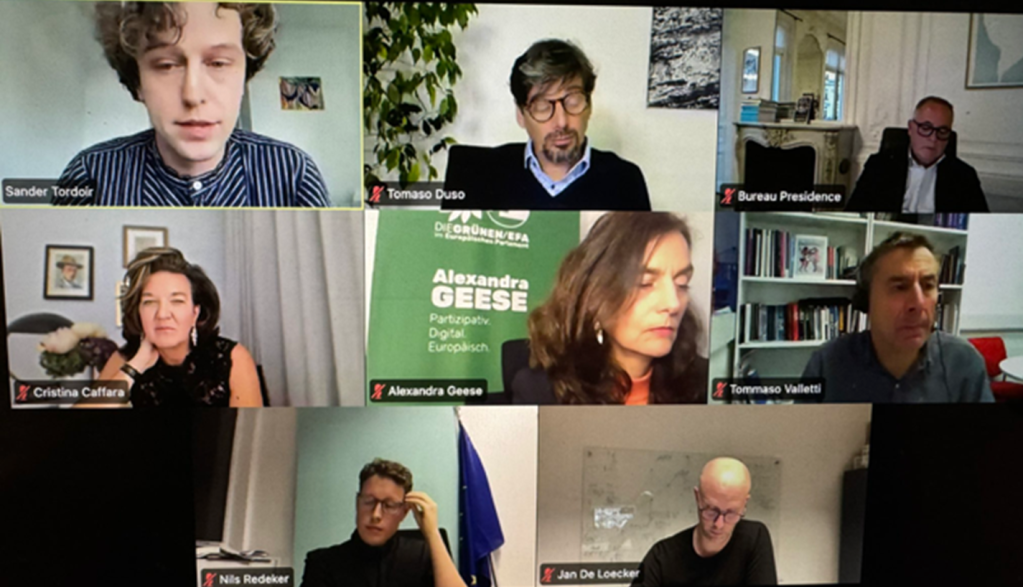
Question for Sander Tordoir
You have been writing about the production and trade landscape going through major changes post Covid – big shifts in trade flows, tariffs, Chinese overcapacity. Last Ju/ly we had US Trade minister Tai on this platform explaining how the Biden Administration’s trade policy had aligned with antimonopoly values and abandoned efficiency as a goal. Draghi warns Europe “other blocs are no longer playing by the rules”, we are still sticking to the old Washington consensus of open free trading economies but that’s over and we better wake up. You have written how Europe and Berlin in particular are very behind appreciating this new landscape. Tell us what you see as the big consequential changes underway, that competition regulators in key strategic sectors should be informed about.
Question for Nils Redeker
Industrial policy in Europe is not one-stop-shopped in Brussels – but firmly in the hands of national capitals (Brussels only has state aid to moderate their worst instincts to unfairly prop up national weak firms). But the new Commission – adopting Draghi’s vision – at least on paper has ambitions for a common industrial strategy in key sectors – how is this going to come about? And how should competition policy be useful here?
Question for Jan de Loecker
You have done seminal academic work on the rise of concentration and markups. Globally but also in Europe. What do you make of Draghi’s call for “scaling up”, for “size” which he says are major reasons for our inability to compete on a par with the other blocks? Do you agree with this emphasis on size, and what can competition policy contribute to this? We don’t want to relax merger control, it’s so relaxed it’s practically flat already. Are there trade offs that you think are potentially acceptable though – for instance we could accept some mergers raising prices somewhat if they leaded to greater investment? This is anathema in competition circles, but worth some policy R&D?
Watch the livestream here New European Commission, New Mission: “Modernizing Competition Policy”- How? | CEPR


 The “Post-Bubble” Blog